Best Digital Nomad Countries to Live and Work in 2026

There are now more than 60 countries competing for remote workers’ income, according to SiliconValleyTime’s 2026 comparison, which makes picking from the best digital nomad countries genuinely harder than it was a few years ago — not because the options are bad, but because there are too many good ones solving different problems. This roundup breaks down where 2026’s data actually points, plus links out to the full guides we’ve already published for a few standout picks.
How We’re Judging “Best”
There’s no single right answer here — the best fit depends on what you’re actually optimizing for: lowest cost, tax efficiency, a path to long-term residency, or simply the fastest legal way to start working from somewhere new. Altery’s 2026 guide makes this point well: a six-month trial base and a five-year relocation plan call for genuinely different decisions, not the same generic “top 10” list.
Spain: Europe’s Highest-Ranked Program
Spain currently holds the top spot in the Global Digital Nomad Visa Index with a near-perfect score, according to SiliconValleyTime’s ranking, and Immigrant Invest’s separate 2026 Digital Nomad Visa Index also places Spain at number one overall, ahead of Malta, Portugal, Germany, and Hungary. Beyond the ranking, Spain’s program comes with a genuinely attractive tax perk: a 15% flat tax rate for the first four years, according to Casa Basilico’s 2026 breakdown. The program’s popularity is real — Spain has issued nearly 32,000 digital nomad visas since launch, with applications up 40% year-over-year, which is also tightening housing availability in Barcelona and Madrid specifically.
Portugal: The Gold Standard for a Long-Term European Base
Portugal’s D8 visa remains what most guides call the benchmark program for Europe. Per Casa Basilico’s 2026 analysis, the income threshold sits at €3,040 per month — four times Portugal’s minimum wage — paired with a genuine path to residency and, eventually, EU citizenship. Savory & Partners’ 2026 guide notes Portugal has invested specifically in nomad infrastructure, including Madeira’s dedicated Digital Nomad Village, and that after five years of legal residence, D8 holders may become eligible for permanent residency or citizenship, subject to standard residency and language requirements.
Thailand: Unmatched Duration and Flexibility
For remote workers who want the longest possible runway without committing to a European residency track, Thailand’s Destination Thailand Visa (DTV) stands out. SiliconValleyTime’s 2026 ranking specifically calls Thailand’s 5-year DTV unmatched for duration and flexibility among Asian options, alongside Bali as the region’s other strongest pick — though neither offers a permanent residency pathway, so both work best as a long-stay base rather than a permanent relocation.
Worth Knowing: Georgia and Mexico for Different Priorities
Two countries come up repeatedly for very specific reasons. Georgia allows visa-free stays of up to 365 days for most nationalities without even requiring a formal digital nomad program, combined with zero income tax on foreign-earned income, according to Casa Basilico’s guide — making it one of the simplest, most tax-efficient options available anywhere. Mexico suits long-stay “slowmads” well, with a relatively low income bar of around $1,500 per month depending on the consulate handling your application, per the same source.
The Three We’ve Already Covered in Depth
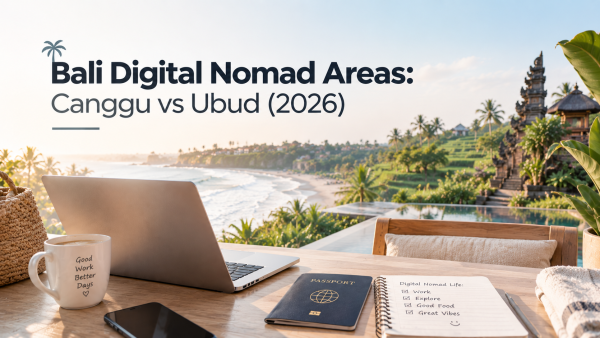
If Latin America or Southeast Asia is more your speed than Europe, we’ve published full breakdowns on three standout options already. Our Bali digital nomad visa guide and remote working in Bali benefits article cover Asia’s most established international nomad community. Our Costa Rica digital nomad guide covers a destination built around genuine wellness and Blue Zone longevity culture with zero tax on foreign income. And our Colombia digital nomad visa guide covers the lowest income threshold of any major program, paired with a timezone that specifically favors US-based remote workers.
How to Actually Choose
Match your priority to the right pick rather than chasing a single “best” answer. For the strongest long-term residency and citizenship pathway, Portugal or Spain lead the pack. For the simplest, fastest, most tax-efficient setup with no long-term commitment, Georgia is hard to beat. For the longest possible stay in Asia without European paperwork, Thailand’s DTV wins on duration. For the lowest cost of entry in Latin America, Colombia’s income threshold is the lowest of any program covered here. And if community and infrastructure matter more than tax optimization, Bali still has the deepest, most established nomad scene of any single destination.
The Bottom Line
The best digital nomad countries for 2026 aren’t a single ranked list so much as a set of trade-offs — tax treatment, income thresholds, residency pathways, and lifestyle all pull in different directions depending on what you actually need. Spain and Portugal lead for Europeans wanting a genuine long-term base, Thailand and Bali lead for flexibility and community in Asia, and Colombia and Costa Rica lead Latin America for cost and wellness respectively. Pick the trade-off that matches your actual plan, not just the country with the prettiest Instagram feed.
Sources:
- SiliconValleyTime — Best Digital Nomad Visas in 2026 – 15 Countries Ranked by Income, Tax & Lifestyle, April 2026
- Immigrant Invest — The 2026 Digital Nomad Visa Index
- Casa Basilico — Best Digital Nomad Visas in 2026 (Country by Country), May 2026
- Altery — Best Countries for Digital Nomads in 2026, April 2026
- Savory & Partners — Digital Nomad Visas in 2026: Best Countries, Income Requirements, and How to Apply, April 2026
- Taxes for Expats — Digital Nomad Visa Countries 2026: Best & Cheapest Options, April 2026


Leave a Reply