Eastern Europe Visa Sponsorship: Poland & Czechia
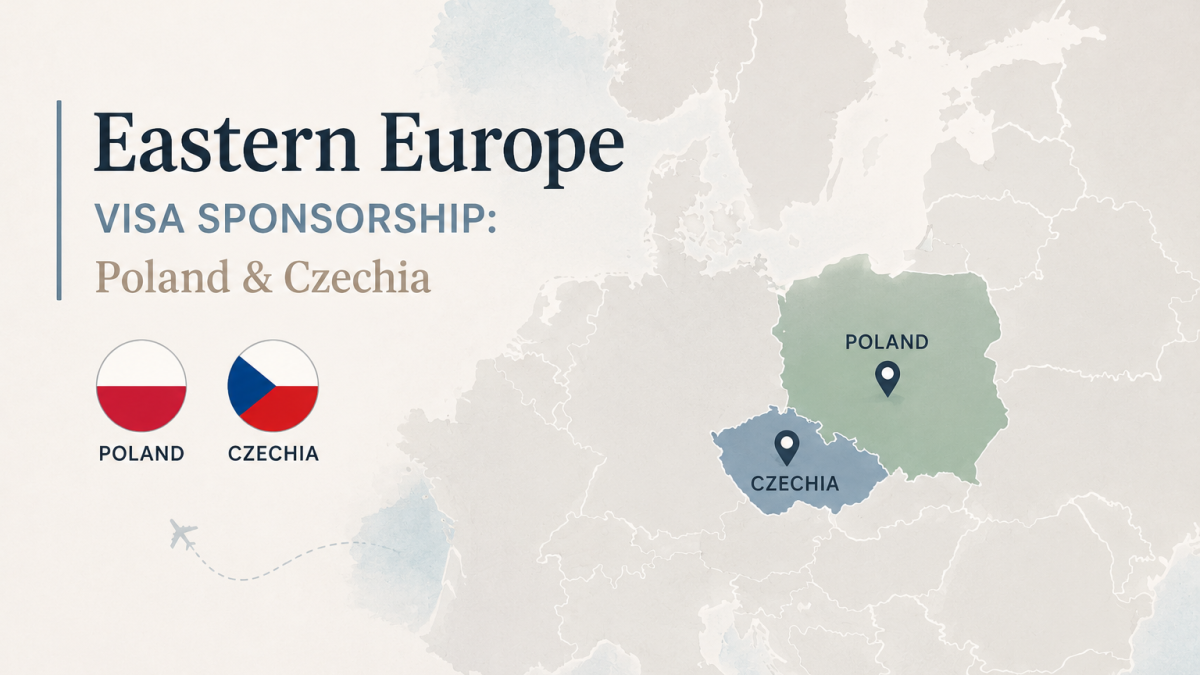
Eastern Europe visa sponsorship rarely gets mentioned in the same breath as the US, UK, or Germany, but for a lot of applicants it’s actually the more realistic starting point — lower salary thresholds, faster processing in some cases, and far less competition per opening than the household-name destinations everyone applies to first. If you haven’t already, it’s worth reading our main guide to US and Europe visa sponsorship jobs first for the bigger picture, since Poland and Czechia specifically have become two of the most active labor markets in the EU for foreign hires, and both run structured, government-administered sponsorship systems worth understanding properly.
Why Eastern Europe Is Worth Considering
Labor shortages in Poland and Czechia are severe enough that both governments actively streamline foreign hiring rather than restrict it. Czechia’s unemployment rate sits around 2.8%, among the lowest in the EU, which is pushing employers across manufacturing, IT, logistics, and healthcare to recruit internationally out of necessity rather than preference, according to Global Work Path’s 2026 guide. That labor gap tends to translate into more realistic odds for applicants without years of Western European work history already on their CV.
Poland: Type A Work Permit and the EU Blue Card
Poland’s main sponsorship route for non-EU workers is the Type A work permit, tied to a specific employer and role. According to Playroll’s 2026 employer guide, the process requires a compliant written job offer meeting Polish labor law, with a 2026 salary floor of PLN 4,806 gross per month for full-time roles. Since June 1, 2025, the entire application has moved to a digital system through praca.gov.pl, which has generally sped up processing compared to the old paper-based system.
One important step in the Polish process is the labor market test — employers generally have to advertise the role locally first to confirm no Polish or EU candidate is available, though a broad list of exemptions exists depending on nationality, role, and circumstances. For highly qualified professionals, especially in IT and engineering, Poland also issues the EU Blue Card, which several major international employers with Polish offices default to for sponsorship, per Euro Top Tech’s 2026 analysis.
Sectors most actively sponsoring in Poland include IT, manufacturing, logistics, construction, and healthcare — with nursing and physician roles specifically named as in-demand categories in multiple 2026 industry breakdowns.
Czechia: The Employee Card System
Czechia’s primary route is the Employee Card, a dual-purpose document that functions as both your work permit and residence permit simultaneously — a genuinely useful simplification compared to countries that require separate applications for each. Per the Czech Ministry of Foreign Affairs’ official guidance, the legal processing time is 60 days, extendable to 90 days in more complex cases, and the administrative fee is 5,000 CZK when applying from outside Czechia.
A key detail: your job must appear in the Central Register of Job Vacancies that Can Be Filled by Holders of Employee Cards, maintained on the Czech Ministry of Labour and Social Affairs’ employment portal. This effectively means Czechia pre-screens which roles are open to non-EU sponsorship, so checking that register early — before investing time applying to a specific employer — can save you months of wasted effort.
Setting Realistic Expectations on Pay
Be clear-eyed about the trade-off: Eastern European salaries generally run well below US, UK, or Western European levels, even for skilled roles. What you’re generally trading for is a meaningfully faster and less competitive path into the EU, along with the ability to build EU work history that can make a later move to Germany, France, or elsewhere in the Schengen Area considerably easier than applying from outside Europe entirely.
What This Means If You’re Applying From Nigeria or South Africa
Eastern Europe visa sponsorship can be a strong option if you have technical, engineering, or manufacturing experience but haven’t yet built the kind of Western-market résumé that US or UK employers tend to favor. Poland’s IT sector specifically has a track record of sponsoring internationally trained engineers without requiring prior EU work experience, provided your technical portfolio is strong.
What This Means If You’re Applying From the Philippines
Healthcare and hospitality remain strong categories in both Poland and Czechia, mirroring the broader European pattern. If nursing specifically is your path, our nursing visa sponsorship guide covers the US and UK routes in more detail and is worth comparing against what Poland and Czechia offer. As with any international role, register with the Department of Migrant Workers before signing any contract — this applies just as much to Eastern European employers as it does to the US or UK.
What This Means If You’re Applying From India
Indian IT and engineering professionals are well-positioned for Poland’s Blue Card and Type A routes specifically, given the strong overlap between Poland’s shortage sectors and common Indian technical qualifications. If your goal is ultimately Western Europe rather than Poland itself, treat this as a legitimate stepping-stone strategy rather than a lesser option — EU work history genuinely does make subsequent applications elsewhere easier.
Documents to Prepare
Across both countries, expect to need: a valid passport, your signed employment contract, proof of qualifications relevant to the role, a clean criminal record certificate, proof of accommodation in some cases, and health insurance documentation. Czechia specifically requires travel medical insurance covering the period before your public health insurance registration kicks in.
Scam Warning Specific to This Region
Because Eastern European sponsorship is less discussed than US or UK routes, it’s also less scrutinized by applicants — which makes it a target for fake agencies. Be suspicious of anyone who asks for payment before a genuine, named employer has issued a contract, who cannot point you to the Polish or Czech job vacancy registries directly, or who claims they can bypass the labor market test or Employee Card vacancy register for a fee. Both processes are meant to be handled by your actual employer, not a third-party agent charging you directly.
The Bottom Line
Eastern Europe visa sponsorship through Poland and Czechia won’t match US or UK salaries, but it offers something those routes often don’t: faster processing, real labor shortages working in your favor, and a legitimate foothold inside the EU that can open doors further west later. For applicants willing to trade some salary for speed and lower competition, it’s worth serious consideration rather than a fallback option. Browse our full library of visa sponsorship guides to compare this route against the US, UK, and other options before deciding where to focus your applications.
Sources:
- Global Work Path — Czech Republic Work Permit 2026: Process Time & Requirements
- Playroll — Poland Work Permits & Visas: Types & How to Sponsor, 2026
- Euro Top Tech — Visa Sponsorship in Poland for Software Engineers (2026), April 2026
- Ministry of Foreign Affairs of the Czech Republic — official Employee Card guidance



Leave a Reply