Remote Working in Bali: The Real Guide for Digital Workers Who Want More Than a Pretty View
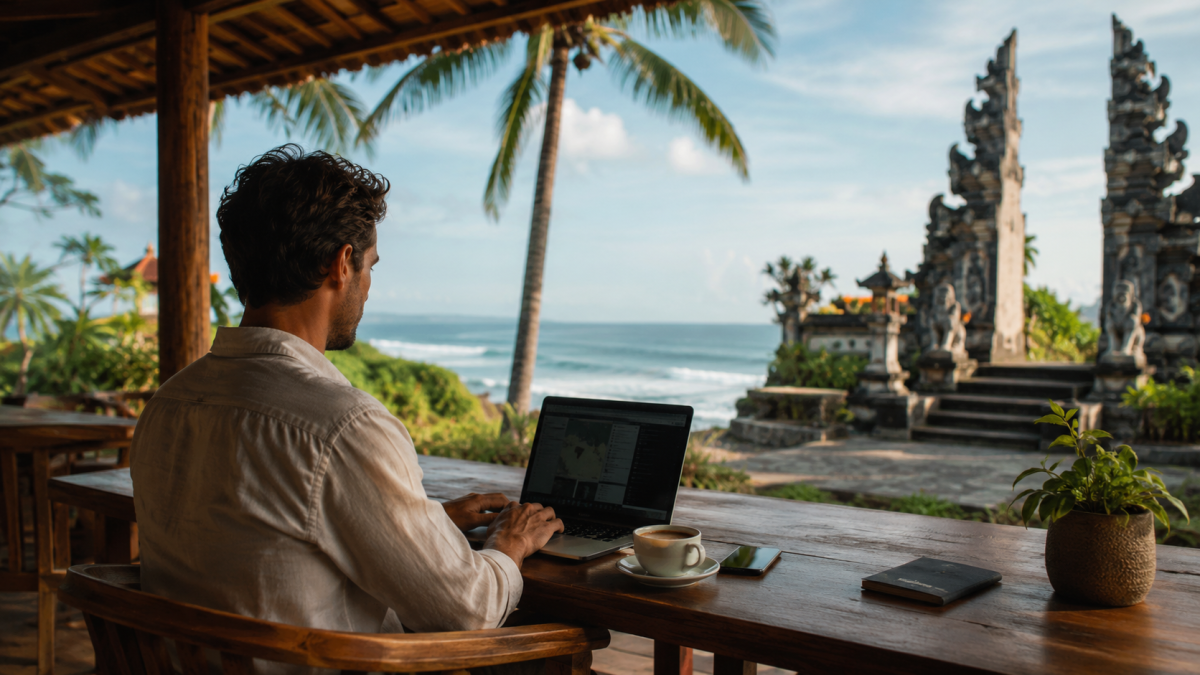
Remote working in Bali sounds like the dream version of adult life.
You wake up near rice fields, answer emails with a coffee in hand, take meetings in the morning, and still have enough daylight left for a beach walk, a temple visit, or dinner somewhere with a sunset view that feels almost unfair.
That dream is real.
But only when it is built on something stronger than Instagram fantasy.
Remote working in Bali is not just about booking a villa and opening a laptop by the pool. It is about legal stay, stable income, reliable internet, time-zone discipline, tax awareness, and the ability to create a routine in a place that constantly tempts you to forget your routine.
That is why this guide is not written like a travel brochure.
It is written for people who want the fun part and the reality.
If you are exploring flexible international roles before making the move, you can also browse remote-friendly opportunities through ISKCON of Escondido Jobs.
Why Remote Working in Bali Still Feels So Attractive
There is a reason remote working in Bali keeps pulling people in.
Bali changes the atmosphere of a normal workweek.
A Monday feels different when your lunch break happens near greenery instead of traffic. A stressful week feels lighter when you can reset with ocean air, mountain views, or a quiet café in a slower neighborhood.
For many digital workers, Bali offers a mix that is hard to ignore:
- Warm weather all year
- A strong café and coworking culture
- International remote-worker communities
- Natural scenery
- Flexible lifestyle options
- A more creative day-to-day environment
- Easy weekend exploration
- A better sense of rhythm outside work
The island’s appeal is not only aesthetic. Bali can give people a feeling that life is bigger than work, while still allowing work to remain serious.
That balance is exactly why remote working in Bali is so tempting.
The Truth About Remote Working in Bali
The fantasy version of remote working in Bali is very simple.
It looks like this:
- Wake up whenever you want
- Work from a beautiful café
- Take one or two calls
- Spend the afternoon exploring
- Repeat forever
The real version is more practical.
It looks more like this:
- Confirm your employer actually allows international remote work
- Use the correct immigration route
- Make sure your internet is strong enough for video calls
- Build a work-friendly home setup
- Plan your schedule around time zones
- Understand possible tax obligations
- Avoid overspending
- Create boundaries between work and vacation
- Respect local culture and community life
The dream is still there.
It just works better when it is supported by real planning.
Who Remote Working in Bali Is Best For
Remote working in Bali is best for people whose income is already location-flexible.
That may include:
- Software developers
- Designers
- Writers
- SEO specialists
- Digital marketers
- Online consultants
- Product managers
- Project managers
- Recruiters
- Customer success professionals
- Remote support specialists
- E-commerce managers
- Video editors
- Content strategists
- Founders and freelancers
However, the more important question is not only whether your job can be done online.
The real question is:
Are you actually allowed to do that job while physically staying in Indonesia?
Some companies say “remote,” but they mean:
- Remote within one country
- Remote within one region
- Remote only if payroll is local
- Remote only for short trips abroad
- Remote only if company data rules allow it
Before planning remote working in Bali, ask your employer or client:
- Am I allowed to work from Indonesia?
- Is there a limit on how long I can stay abroad?
- Will this affect payroll or taxes?
- Are there security restrictions?
- Do I need written approval?
- Will my working hours still overlap with the team?
A role being “remote” does not automatically mean “work from anywhere forever.”
Remote Working in Bali Starts With the Visa, Not the Villa
One of the biggest mistakes people make is planning the lifestyle before checking the immigration rules.
For remote working in Bali, the legal side matters first.
Indonesia’s official immigration system includes the E33G Remote Worker Visa, which is designed for foreigners who want to stay in Indonesia while carrying out assignments for a company outside Indonesia.
According to the official Indonesian Immigration and eVisa information, this visa allows eligible foreigners to stay in Indonesia while working for an overseas company, travel in and out of Indonesia, and also engage in tourism and family visits.
That makes it one of the most relevant legal routes for remote working in Bali.
What the E33G Remote Worker Visa Requires
The official Indonesian eVisa information for the E33G route lists requirements that may include:
- A passport valid for at least six months
- A recent photograph
- A curriculum vitae
- A travel itinerary
- A personal bank statement showing at least US$2,000
- Proof of annual salary or income worth at least US$60,000 per year
- An employment contract with a company established outside Indonesia
The same official guidance also states that E33G visa holders are prohibited from selling goods or services in Indonesia and prohibited from working for compensation from individuals or companies in Indonesia.
That distinction is important.
Remote working in Bali under this route is about doing work for a company outside Indonesia, not casually mixing into the local labor market without the right permissions.
Always verify the latest requirements on the official Indonesian Immigration website before applying, because fees and rules can change.
Remote Working in Bali and Tax Awareness
Visa status and tax status are not the same thing.
A person can have a valid visa and still need to think carefully about tax residence and reporting.
Indonesia’s Directorate General of Taxes explains that a foreign citizen may be classified as a domestic tax subject if they stay in Indonesia for more than 183 days within a 12-month period, or if they stay in Indonesia and show an intention to reside there.
That does not mean every remote worker will have the same tax outcome. It means remote working in Bali can create tax questions that should not be ignored.
Your situation may depend on:
- Length of stay
- Source of income
- Employer location
- Tax residence elsewhere
- Treaty rules
- Whether you are an employee or contractor
- Personal and economic ties
If you are planning long-term remote working in Bali, speak with a qualified tax professional who understands both Indonesia and your home country.
Do not rely only on social media answers for tax decisions.
The Best Areas for Remote Working in Bali
One of the best things about remote working in Bali is that Bali is not one single lifestyle.
Different areas feel completely different.
Canggu: Social, Busy, and Hyper-Connected
Canggu is probably the most famous remote-work area in Bali.
It is known for:
- Coworking spaces
- Cafés
- Social energy
- Beach access
- Fitness studios
- International community
- Startup-friendly atmosphere
Canggu can be great if you enjoy networking and fast-moving energy.
But it also comes with:
- Traffic
- Noise
- Higher prices
- More distractions
- A stronger “always out” culture
If you want social momentum, Canggu may work.
If you need deep focus and quiet evenings, test it before committing.
Ubud: Slower, Greener, and More Reflective
Ubud appeals to remote workers who want a softer daily rhythm.
It is known for:
- Rice fields
- Wellness culture
- Creative atmosphere
- A calmer environment
- Art and cultural spaces
- Cafés with quieter energy
Ubud may suit writers, consultants, designers, coaches, and people who prefer structure without constant nightlife.
Still, not every part of Ubud is quiet. Before signing a lease, check road access, internet strength, and nearby noise.
Sanur: Calm and Routine-Friendly
Sanur is often overlooked, but it can be a strong choice for remote working in Bali.
It tends to feel more stable and residential. It may suit professionals who want:
- A calmer coastal environment
- Walkable routines
- Less social pressure
- Easier long-term rhythm
- A more balanced lifestyle
Sanur is not the trendiest option. That is exactly why some remote workers love it.
Tabanan and Quieter Areas: Great for Focus
For people who want a slower and greener life, quieter parts of Bali can be extremely appealing.
The Bali Government Tourism Office highlights Tabanan attractions such as Beratan Lake Temple and other scenic destinations, showing why this area is often associated with a more peaceful side of Bali.
For remote working in Bali, quieter areas can be wonderful for focus, but they require extra infrastructure checking.
Before renting in a more rural area, verify:
- Internet speed
- Mobile backup signal
- Distance to food and shops
- Road access
- Electricity reliability
- Noise levels
- Workspace comfort
A peaceful location is great.
A peaceful location with unstable Wi-Fi is a problem.
The Daily Setup You Need for Remote Working in Bali
Beautiful scenery is not enough.
You still need a serious work setup.
Internet Matters More Than the View
Ask before renting:
- What is the download speed?
- What is the upload speed?
- Is the internet private or shared?
- Is it stable during rain?
- Does it slow down at night?
- Which mobile provider works best in the area?
- Can you run a speed test in the room?
For remote working in Bali, upload speed matters just as much as download speed if your job includes:
- Video calls
- File sharing
- Livestreaming
- Remote desktop tools
- Cloud backup
- Design collaboration
- Client presentations
Always have a mobile-data backup.
Workspace Matters More Than Instagram
A villa can look beautiful and still be bad for work.
Check:
- Desk comfort
- Chair support
- Lighting
- Temperature
- Background for meetings
- Noise
- Power outlets
- Privacy
- Airflow
A strong workspace is what allows you to enjoy Bali after work instead of spending the whole day uncomfortable and distracted.
Time Zone Discipline Is Real
Bali operates on WITA (UTC+8).
That works well for teams in:
- Singapore
- Malaysia
- Hong Kong
- The Philippines
- Parts of Australia
- East Asia
It may be harder for teams in:
- Europe
- The UK
- The US
- Canada
If your employer is US-based, remote working in Bali may mean late-night shifts or overnight overlap. That can reshape your entire lifestyle.
Before moving, test your work schedule for a week from home first.
How Much Remote Working in Bali Really Costs
There is no one “Bali budget.”
Your costs depend on:
- Area
- Accommodation type
- Length of stay
- Lifestyle
- Coworking use
- Transport
- Insurance
- Dining habits
- Travel habits
- Visa and tax-related support
A realistic monthly budget may include:
- Rent
- Utilities
- Internet
- Mobile data
- Food
- Transport
- Coworking
- Gym
- Health insurance
- Visa costs
- Emergency savings
- Equipment replacement fund
The biggest mistake is budgeting like a tourist.
Tourists often forget:
- Deposits
- Healthcare
- Work setup
- Tax advice
- Emergency flights
- Laptop repair or replacement
- Long-term transport costs
- Seasonal price changes
A smarter way to plan remote working in Bali is to create three budgets:
Minimum Budget
Only essentials.
Comfortable Budget
A balanced version with coworking, exercise, and social flexibility.
Emergency Budget
A buffer for when real life happens.
Bali feels much better when money is not quietly stressing you every week.
The Biggest Mistakes People Make With Remote Working in Bali
Some common mistakes include:
- Treating Bali like a permanent holiday
- Ignoring visa rules
- Assuming tax issues do not apply
- Choosing location based only on aesthetics
- Underestimating traffic and transport time
- Renting without testing internet
- Overloading the schedule with social activities
- Saying yes to too many weekend trips
- Working from bad setups for months
- Thinking “fully remote” means “no structure needed”
The best version of remote working in Bali is not the most chaotic one.
It is the one that feels sustainable.
A 30-Day Test for Remote Working in Bali
Before committing long term, treat Bali like a trial period.
Week 1: Test Infrastructure
Check internet, workspace, transport, and sleep.
Week 2: Test Productivity
Track whether you can actually complete real work at a high level.
Week 3: Test Lifestyle
Evaluate routine, social energy, motivation, and spending.
Week 4: Test Long-Term Reality
Ask whether your visa, tax awareness, income, and schedule make this sustainable.
At the end of 30 days, the answer may be:
- Stay longer
- Move to a different area
- Return later
- Keep Bali as a short-term work base
- Decide Bali is better for holidays than for work
Every result is useful.
The point is not to force the dream.
The point is to test the dream honestly.
Is Remote Working in Bali Worth It?
Remote working in Bali can absolutely be worth it when:
- Your employer approves it
- Your income is stable
- Your visa route is correct
- You understand possible tax implications
- Your time zone is manageable
- Your workspace is reliable
- You can build routine and discipline
- You respect local culture and law
- You have emergency savings
It may not be worth it when:
- Your employer has not approved international work
- Your income is unstable
- You are relying on the wrong visa
- You have not checked tax risk
- You expect Bali to solve career problems
- You have no buffer for emergencies
- You want the lifestyle without the structure
Bali can make life feel bigger and more alive.
But it cannot replace planning.
Final Thoughts on Remote Working in Bali
At its best, remote working in Bali is not about escaping work.
It is about rebuilding the way work fits into life.
It is the chance to work seriously while living closer to nature, movement, culture, and a different daily rhythm. It can be energizing, inspiring, and genuinely fun.
But the strongest Bali setup is not the flashiest one.
It is the one built on:
- Legal clarity
- Stable income
- Reliable internet
- Smart budgeting
- Time-zone awareness
- Cultural respect
- Good habits
- Realistic expectations
If you want a tropical background for your laptop, Bali can deliver that.
If you want a sustainable remote-working lifestyle, Bali can deliver that too — but only when you treat it like a real life, not a content fantasy.
And if you are still searching for the right remote role before making the move, start by exploring opportunities through ISKCON of Escondido Jobs.
Frequently Asked Questions About Remote Working in Bali
Can foreigners legally do remote working in Bali?
Yes, foreigners may be able to do remote working in Bali through the correct immigration route, such as the official E33G Remote Worker Visa, as long as they meet the requirements and follow the visa conditions.
What is the E33G Remote Worker Visa?
It is an Indonesian visa route designed for eligible foreigners who want to stay in Indonesia while performing work for a company established outside Indonesia.
Does remote working in Bali require an Indonesian sponsor?
According to the official Indonesian Immigration and eVisa information for the E33G route, this visa does not require an Indonesian sponsor.
How long can remote working in Bali be supported by the E33G visa?
The official eVisa information states that the E33G visa can support a stay of up to one year, subject to the applicable conditions and validity rules.
Can remote working in Bali create Indonesian tax issues?
Potentially yes. Indonesian tax treatment may depend on the length of stay, intention to reside, and other personal circumstances.
Which area is best for remote working in Bali?
That depends on your personality and work style. Canggu is social and busy, Ubud is slower and greener, Sanur is calm and routine-friendly, and quieter areas like Tabanan may work well for focused living.
Is internet reliable enough for remote working in Bali?
In many places, yes — but it varies by property and area. Always test download speed, upload speed, and mobile-data backup before committing to a long stay.
Should I move to Bali before getting a remote job?
A safer strategy is to secure stable remote income first, confirm employer approval, and review the visa and tax situation before relocating.
Official Sources and Useful Links



Leave a Reply