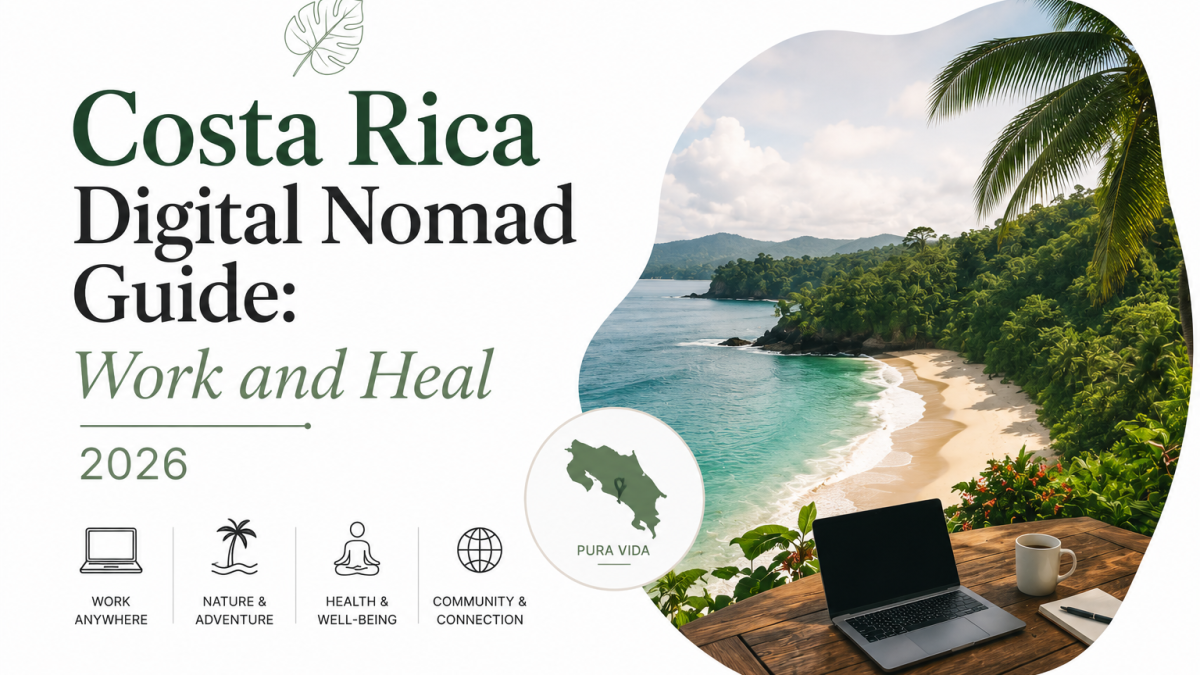
Costa Rica Digital Nomad Guide: Work and Heal 2026
If Bali is the obvious first stop for remote workers chasing sunshine and a laptop lifestyle, Costa Rica digital nomad life is quickly becoming the answer for people who want something a little different — a place built as much around restoration and longevity as it is around coworking cafés. If you’re comparing destinations, browse our full jobs and visa resource hub for more options like this one. Google search trend data cited by The Tico Times ranks Costa Rica third among the world’s top trending digital nomad destinations heading into 2026, just behind Colombia and New Zealand. Here’s what actually makes it worth serious consideration.
The Visa: Legal, Fast, and Tax-Free on Foreign Income
Costa Rica’s Digital Nomad Visa — officially the Estancia para Trabajadores y Prestadores Remotos de Servicios — became law in 2021 and has been fully operational since 2022, according to SiliconValleyTime’s 2026 legal guide. As of 2026, it remains one of Latin America’s most competitive remote work programs: a $100 application fee, roughly 15 days of processing time, and up to two years of legal stay.
To qualify, you’ll need to show a stable monthly income of at least $3,000 USD for an individual or $4,000 USD for families, typically demonstrated through 12 months of bank statements, per CostaRicaBoard’s tax and setup guide. The standout benefit: Costa Rica runs a territorial tax system, meaning foreign-sourced income is explicitly exempt from local income tax. That said, this doesn’t erase your home-country obligations — Americans, for instance, still have to file with the IRS on worldwide income regardless of where they’re living, so a cross-border tax consultation before you relocate is genuinely worth the cost.
The Healing Angle: A Real Blue Zone, Not Just Marketing
This is where Costa Rica separates itself from most other remote-work destinations. The Nicoya Peninsula is one of only five Blue Zones in the world — regions with a scientifically documented concentration of people living unusually long, healthy lives, according to Special Places of Costa Rica’s coverage. The lifestyle behind that longevity isn’t a trend or a retreat package — it’s rooted in daily movement, a whole-food diet, and strong community ties that have persisted in the region for generations.
Nosara, on that same peninsula, has built its entire identity around this. Per Drink Tea & Travel’s 2026 local guide, it’s the peninsula’s wellness capital — largely protected from overdevelopment, ringed by undeveloped surf beaches, and dense with yoga studios and farm-to-table restaurants. It draws a genuinely health-conscious expat community rather than a party-focused one, though CostaRicaBoard’s guide notes the trade-off: it’s Costa Rica’s most expensive beach town, with real healthcare access limited to roughly an hour away in Nicoya.
Where to Actually Base Yourself
Different towns serve very different priorities. Per SiliconValleyTime’s 2026 nomad ranking, Tamarindo leads for networking and infrastructure — coworking cafés, high-speed fiber, and a genuinely active professional events scene. Santa Teresa and Nosara appeal most to people specifically chasing the Blue Zone’s longevity culture and a slower, wellness-first pace. San José offers the strongest general infrastructure, including the international airport and reliable banking, making it the practical choice if healthcare access and city amenities matter more to you than beach proximity. On the Caribbean side, Puerto Viejo offers a different cultural texture entirely, with reggae influence and easy access to wildlife reserves for those wanting a quieter, less Americanized experience.
What It Actually Costs
Costa Rica isn’t the cheapest option in the region, but it delivers real value at the income level the visa already requires. A couple in the Central Valley can live comfortably on around $2,500 per month with room for travel and entertainment, according to Coldwell Banker Sunset Reef Realty’s 2026 cost breakdown. For a single remote worker, SiliconValleyTime’s guide estimates housing for a nice one-bedroom with reliable Wi-Fi runs $700 to $1,200 per month, with many nomads reporting a comfortable lifestyle well under $2,000 total. Beach towns like Nosara and Tamarindo run noticeably higher than inland or Central Valley living, so factor that into which town you choose.
Internet and Everyday Infrastructure
Fiber internet has expanded significantly across Costa Rica’s main nomad hubs, with SiliconValleyTime reporting consistent speeds of 40 to 100 Mbps — enough for video calls, cloud workflows, and standard remote work without the connectivity stress that plagues less-developed nomad destinations. Costa Rica is also widely regarded as one of the safest countries in Central America, though standard precautions — sticking to well-lit areas at night and using rideshare apps after dark — still apply, per the same guide.
How This Compares to Remote Working in Bali
If you’re weighing this against Southeast Asia, the honest comparison is about what kind of “recharge” you’re after. Our guide to the real benefits of remote working in Bali covers a destination built more around a large international nomad community and beach-club social scene, and our Bali digital nomad visa breakdown covers that program’s requirements if you want a side-by-side comparison. Costa Rica leans harder into genuine wellness and longevity culture, particularly on the Nicoya Peninsula. Both offer legitimate digital nomad visas and strong infrastructure — the right choice depends on whether you’re seeking community and energy or quiet and restoration.
The Bottom Line
Costa Rica digital nomad life offers something increasingly rare in this space: a legal, fast, tax-advantaged visa combined with a wellness culture that’s backed by genuine longevity science rather than lifestyle marketing. It’s not the cheapest destination on the map, but for remote workers who want their relocation to double as an actual reset — not just a change of scenery — the Nicoya Peninsula’s Blue Zone towns offer something most other nomad hubs simply can’t claim.
Sources:
- The Tico Times — Costa Rica is a Leading Digital Nomad Destination in 2026, December 2025
- SiliconValleyTime — Can You Work Remotely in Costa Rica?, May 2026
- SiliconValleyTime — Costa Rica Digital Nomad Guide for 2026, April 2026
- CostaRicaBoard — Costa Rica Digital Nomad Visa 2026: Tax & Setup, March 2026
- Drink Tea & Travel — Best Places To Live In Costa Rica: A Local’s 2026 Guide, June 2026
- Special Places of Costa Rica — Discover Costa Rica’s Blue Zone: The Nicoya Peninsula, February 2026
- Coldwell Banker Sunset Reef Realty — Cost of Living in Costa Rica 2026



Leave a Reply