Bali Digital Nomad Areas: Canggu vs Ubud (2026)
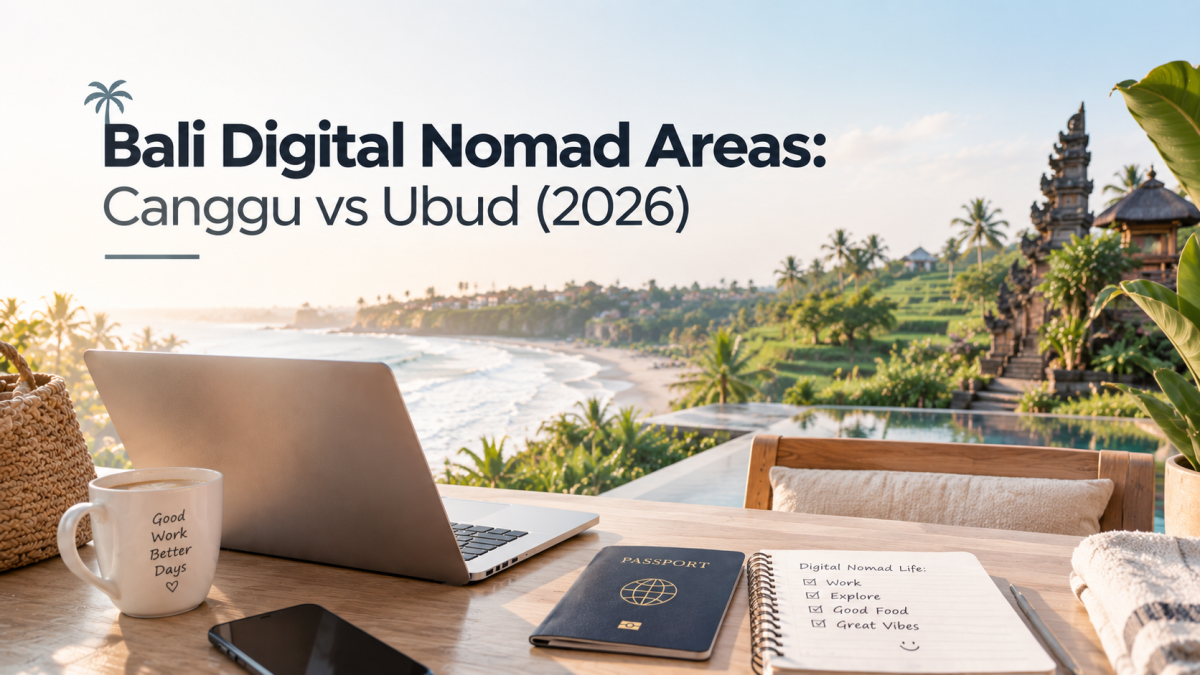
Deciding to move to Bali is the easy part. Figuring out the right Bali digital nomad areas to actually live in is where most people get it wrong — pick the right neighborhood and Bali genuinely feels like the reset you were hoping for; pick the wrong one and you’ll spend your days stuck in traffic wondering what the hype was about, according to Nomads in Asia’s 2026 comparison. Here’s an honest breakdown of where remote workers actually base themselves, and why.
Canggu: The Digital Nomad Capital, At a Price
Canggu wins almost every practical category. It has Bali’s highest density of high-speed fiber-optic connections and dedicated coworking spaces, according to The Young Villas’ 2026 area guide, and Nomads in Asia confirms it hosts the largest digital nomad community in all of Asia — meeting people and finding your footing here happens fast. The trade-off is cost: Canggu is consistently the most expensive of Bali’s nomad hubs, and the area’s famous “Canggu shortcut” road is now one-way for cars during peak hours, with The Young Villas’ guide specifically advising scooter riders to stay patient and car drivers to avoid the route entirely between 4 and 7 PM.
Ubud: Quiet, Nature, and Genuinely Focused Work
If Canggu is energy, Ubud is the opposite pitch — nature, wellness, and deep work without constant social pull, per Nomads in Asia’s guide. It’s also one of the cheapest options alongside Sanur. The trade-off is infrastructure: internet in Ubud averages 20 to 60 Mbps, according to InvestLand Bali’s 2026 guide, noticeably lower than Canggu’s standard 50-100 Mbps fiber, though still generally sufficient for video calls and normal remote work. Hubud and Outpost remain Ubud’s anchor coworking spaces, and areas like Penestanan, Sayan, and Kedewatan offer the best rice-terrace views within the region, per Prestige Property Bali’s 2026 investment analysis.
Uluwatu: Curated Quiet for Surfers and Solo Deep Work
Uluwatu sits on the Bukit Peninsula, which gives it a slightly more isolated feel than Canggu or Ubud, according to Finns Beach Club’s 2026 comparison. Coworking spaces here are fewer and more curated compared to Canggu or Ubud, according to Ohana Retreat’s 2026 guide — which some nomads actively prefer, since it means fewer distractions and fewer competing events. Finns Beach Club’s guide is direct about who this fits: people working on a book or a large solo project who specifically want to get away from other people, drawn by dramatic limestone cliffs and reliably strong surf rather than nightlife or networking density.
Sanur: The Calm, Family-Friendly Long-Term Base
Sanur is one of Bali’s oldest expat communities, according to Living Indonesia’s 2026 guide, offering a genuinely calm, low-tourist-chaos environment with international schools and hospitals nearby — making it the clear pick for remote workers relocating with families rather than solo. Nomads in Asia confirms it sits alongside Ubud as one of the cheapest nomad-friendly areas on the island, without the traffic and crowding that define Canggu.
Areas Most Nomads Actively Avoid
Not every popular tourist area works for remote work. Nomads in Asia’s guide singles out Kuta as the area most nomads avoid entirely — it’s built around party tourism, is genuinely noisy, and offers little in the way of nomad-specific infrastructure. Nusa Dua is a different problem: it’s effectively all-inclusive resort territory, with essentially no coworking or nomad community presence at all.
A Practical Note on Payments
Across all these areas, most cafés and boutiques accept cards, often with a 2-3% surcharge, according to The Young Villas’ guide — but you’ll still need cash for local warungs, beach parking fees, and tipping drivers. The same guide recommends using ATMs only at reputable banks like BCA or Mandiri specifically to avoid card skimming, a real and recurring issue in Bali’s more touristy zones.
Quick Decision Guide for These Bali Digital Nomad Areas
Per Nomads in Asia’s summary framework: choose Canggu if community, coworking density, and social life matter most to you. Choose Ubud if you want quiet, nature, wellness, and genuinely focused work. Choose Sanur if you want a calm, low-cost, family-friendly long-term base without tourist chaos. Choose Uluwatu if you’re a surfer who’s comfortable with minimal infrastructure in exchange for cliff-top quiet.
Before You Choose, Make Sure Your Legal Status Is Sorted
Picking a neighborhood matters, but it only matters once your legal right to stay is settled. If you haven’t already, our Bali digital nomad visa guide covers the E33G visa’s income requirements and application process, and our broader breakdown of remote working in Bali’s benefits covers the cost-of-living and lifestyle trade-offs across the island more generally.
The Bottom Line
There’s no single answer to which Bali digital nomad areas are “best” — the honest answer depends entirely on what you’re optimizing for. Canggu wins on community and infrastructure at the highest price point, Ubud wins on nature and focus at a meaningfully lower cost, Sanur wins on calm and family suitability, and Uluwatu wins for people who genuinely want to work in isolation between surf sessions. Pick based on what you actually need day to day, not what looks best in someone else’s Instagram feed.
Sources:
- Nomads in Asia — Best Neighborhoods in Bali for Digital Nomads: Canggu vs Ubud vs Sanur vs Uluwatu (2026), April 2026
- The Young Villas — Where to Stay in Bali: Ultimate 2026 Area Guide & Comparison, April 2026
- Finns Beach Club — Uluwatu Or Canggu? Which Balinese Beach Town Is Best In 2026?, June 2026
- Ohana Retreat Bali — Best Digital Nomad Destinations in Bali: Where to Live, Work, and Thrive, February 2026
- Living Indonesia — Best Areas to Live in Bali for Foreigners (2026 Guide), July 2026
- InvestLand Bali — Digital Nomad Bali 2026: Visa, Costs and Areas Guide
- Prestige Property Bali — Best Areas to Invest in Bali for Maximum ROI in 2026, August 2026




Leave a Reply