New Zealand Digital Nomad Visa: 2026 Remote Guide
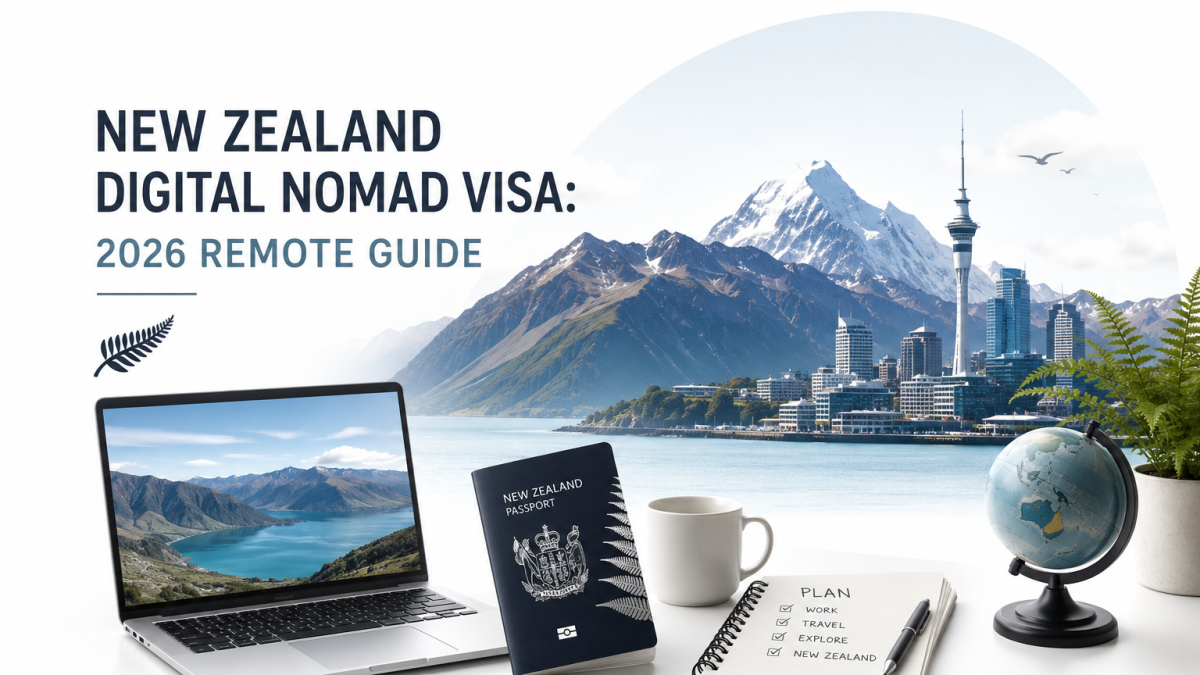
There’s no country on this list that hits the “reset your nervous system” brief quite like New Zealand does. The New Zealand digital nomad visa situation is unusual in a good way: rather than building a brand-new visa category from scratch, the government simply rewired its existing visitor rules — and the result is now ranked the world’s top digital nomad destination for 2026, according to VisasUpdate’s 2026 guide, largely thanks to a low effective income bar paired with strong safety and connectivity scores.
There’s No Dedicated Visa — And That’s the Point
New Zealand doesn’t issue a separate “digital nomad visa” the way Portugal or Colombia do. Instead, per the official Immigration New Zealand announcement, the government changed visitor visa conditions starting January 27, 2025, so that anyone holding a standard visitor visa or an NZeTA (New Zealand Electronic Travel Authority) can legally work remotely for an overseas employer or clients while in the country. The change applies broadly — tourists, people visiting family, and even partners or guardians on longer-term visitor visas all received the same updated conditions.
The rules are specific about what you can’t do while on this arrangement: you cannot work for a New Zealand-based employer, and you cannot provide goods or services to people or businesses inside New Zealand. As long as your income stays entirely foreign-sourced, you’re covered.
How Long You Can Actually Stay
Your options scale with your passport and plans. Travelers from visa-waiver countries — including the US, UK, and most of Europe — can enter on an NZeTA, which generally allows a stay of up to 3 months, or 6 months for UK citizens, according to The Nomad Almanac’s 2026 guide. If you need longer, a standard visitor visa extends that window further: MinterEllison’s legal analysis confirms the existing maximum stay rules still apply on top of the new remote-work conditions — up to 9 months on a single-entry visa, or 6 months for multiple entry, with some exceptions. For a genuinely extended stay, applicants aged 18 to 30 (or up to 35 for some nationalities) can look at New Zealand’s Working Holiday Visa instead, which allows a longer stay and more flexibility, per Global Work & Travel’s 2026 guide.
No Formal Income Threshold — But Don’t Mistake That for No Requirement
Unlike Colombia’s fixed income floor or Portugal’s €3,040/month rule, New Zealand doesn’t publish a specific minimum income figure for remote workers, according to Wise’s 2026 breakdown. That doesn’t mean anything goes — you’re still expected to demonstrate you can support yourself financially for the length of your stay, and immigration officers retain discretion to ask for proof of funds or ongoing remote income during the standard visa application process.
A Tax Change Worth Watching Closely
Here’s where you need to be careful about outdated information. Reporting from VisasUpdate describes a tax reform effective from April 2026 that would extend a meaningful exemption period — up to 275 days — for non-resident remote workers. However, Visa Free Nomads’ guide notes this comes from proposed legislation (the Taxation Annual Rates Bill) that travelers should confirm directly with New Zealand’s Inland Revenue Department (IRD) before assuming it applies to their situation, since proposed tax rules can change before final enactment. Don’t build your financial plan around a favorable tax assumption until you’ve verified it’s actually in force.
Why the Nature Actually Matters Here
This is the part spreadsheets don’t capture well. New Zealand’s landscape spans snow-capped mountains, geothermal valleys, untouched coastlines, and dense native forest, all unusually accessible from its main cities, according to Global Work & Travel’s guide. Combined with a strong cultural identity rooted in Māori tradition and a population known for genuine hospitality, it’s less a backdrop for remote work and more an active part of daily life for people who base themselves there — the kind of environment that’s genuinely restorative rather than just scenic on Instagram. Pair that with modern healthcare, reliable public transport, and strong internet infrastructure, and the practical side of remote work stays just as solid as the emotional reset the country offers.
How New Zealand Compares to Bali, Costa Rica, and Colombia
Each destination we’ve covered solves a different need. Our Bali digital nomad visa guide and remote working in Bali benefits article cover the deepest, most established international nomad community in Asia. Our Costa Rica digital nomad guide leans into Blue Zone wellness and longevity culture. Our Colombia digital nomad visa guide wins on the lowest income bar and a US-friendly timezone. New Zealand’s edge is different again: no dedicated visa bureaucracy to navigate, genuinely world-class natural scenery, and a policy environment the government built specifically to be simple rather than restrictive.
The Bottom Line
The New Zealand digital nomad visa approach proves you don’t need a purpose-built program to be a serious remote-work destination — sometimes updating the rules that already exist is the smarter move. Between the flexible entry options, the lack of a rigid income threshold, and scenery that genuinely earns the word “restorative,” New Zealand is one of the strongest 2026 picks for remote workers who want their relocation to feel like an actual reset, not just a change of Wi-Fi network.
Sources:
- Immigration New Zealand (official government portal) — Working Remotely From New Zealand, January 2025
- VisasUpdate — New Zealand Digital Nomad Visa 2026: Complete Guide to Remote Work
- MinterEllison — Work and Wander? New Zealand’s New “Digital Nomad Visa”, January 2025
- The Nomad Almanac — New Zealand Digital Nomad Visa: 2026 Guide, April 2026
- Wise — Digital Nomad Visa New Zealand: How to Work Remotely in NZ
- Global Work & Travel — New Zealand Digital Nomad Visa: The Complete Guide For 2026
- Visa Free Nomads — New Zealand Digital Nomad Visa: Requirements & Fees, April 2026


Leave a Reply