Bali Remote Work Visa: How to Work From Bali Legally Without Falling for Digital Nomad Myths

The Bali remote work visa is one of the most important things to understand before moving to Bali as a digital worker.
Because Bali is beautiful.
But Bali is not a legal loophole.
For years, Bali has been marketed online as a dream destination for remote workers, freelancers, creators, founders, consultants, designers, developers, marketers, coaches, and digital nomads.
You see the same images everywhere.
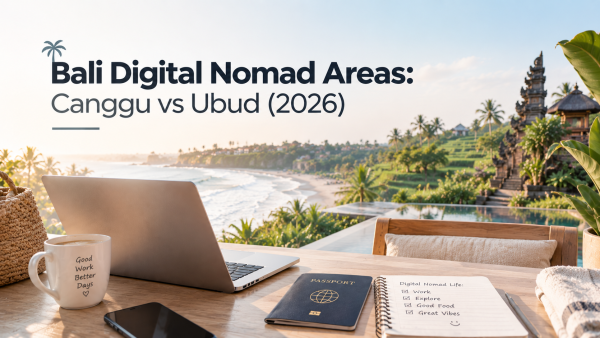
A laptop beside a pool.
A coconut on a wooden table.
A coworking space in Canggu.
A villa in Ubud.
A sunset in Uluwatu.
A scooter parked outside a café.
A caption saying: “I moved to Bali and changed my life.”
But here is the truth that many social media posts skip:
If you want to work remotely from Bali, you need to understand the visa conditions first.
A beach is not a work permit.
A coworking space is not immigration approval.
A tourist visa is not always the right long-term plan.
And a remote worker visa does not usually mean you can take local jobs, sell services to Indonesian clients, or run random business activity inside Indonesia.
This guide explains the Bali remote work visa, what it allows, what it does not allow, who it is best for, what documents remote workers should prepare, and how to avoid the common mistakes that can turn a dream Bali stay into a legal problem.
If you are still comparing remote work countries and international job routes, you can also browse global career ideas through ISKCON of Escondido Jobs while using this Bali guide to plan more carefully.
Why the Bali remote work visa matters
The Bali remote work visa matters because Bali attracts many people who want a flexible lifestyle.
Remote workers often choose Bali because of:
- Warm weather
- Creative community
- Coworking spaces
- Cafés with Wi-Fi
- Wellness culture
- Surf beaches
- Yoga studios
- Startup energy
- International networking
- Lower living costs than many Western cities
- Easier lifestyle for online work
But Bali is still part of Indonesia.
That means Indonesian immigration, tax, labour, and local rules still matter.
Many people confuse “working from Bali” with “working in Bali.”
Those are not always the same thing.
Working from Bali usually means you are physically in Bali while doing remote work for a company or clients outside Indonesia.
Working in Bali may mean you are earning from local Indonesian clients, selling services locally, managing a local business, working for an Indonesian company, or doing activities that may require a different permit.
That difference is the heart of the Bali remote work visa conversation.
The biggest myth about the Bali remote work visa
The biggest myth is this:
If I work online, immigration rules do not matter.
That is wrong.
Remote work still needs legal structure.
A person may be sitting in a villa in Bali and working on a laptop, but immigration can still ask:
- What visa are you using?
- Who pays you?
- Where is your employer based?
- Are you working for an Indonesian company?
- Are you selling services inside Indonesia?
- Are you earning from Indonesian customers?
- Are you respecting your stay permit?
- Are you doing activities allowed under your visa?
The Bali remote work visa is important because it gives remote workers a more specific route than casually relying on tourist-style stays.
But it also comes with conditions.
A legal remote work plan is not only about entering Indonesia.
It is about staying in Indonesia correctly.
What is the Bali remote work visa?
When people talk about the Bali remote work visa, they are usually referring to Indonesia’s remote worker limited stay visa category, commonly known as E33G.
The official Indonesian Immigration page describes E33G as a remote worker second home visa.
According to Indonesian Immigration, this visa allows a foreigner to stay in Indonesia to carry out duties from a company outside Indonesian territory.
The official Indonesian eVisa FAQ also explains that this visa can allow the holder to:
- Carry out assignments from an overseas company
- Travel to and from Indonesia
- Conduct tourism-related activities
- Visit friends or family
This is why the Bali remote work visa is attractive for digital workers who already have foreign employment or foreign clients.
It is designed for remote work linked to overseas income, not local Indonesian employment.
Bali remote work visa: what it may allow
The Bali remote work visa may be suitable if your work is genuinely remote and connected to a company outside Indonesia.
This may include people such as:
- Remote employees working for a foreign company
- Freelancers with overseas clients
- Consultants serving non-Indonesian clients
- Designers working for foreign brands
- Software developers working for overseas employers
- Digital marketers serving international clients
- Writers working for foreign publications
- Virtual assistants supporting overseas businesses
- Product managers working remotely
- Online operations workers
- Customer support workers employed by a foreign company
- Agency workers serving clients outside Indonesia
The important point is not just that the work happens online.
The important point is where the employer, company, or client is based and whether the activity fits the visa conditions.
The Bali remote work visa is not a magic permission slip for every income-generating activity in Bali.
Bali remote work visa: what it does not allow
The Bali remote work visa does not mean you can do anything.
The official eVisa FAQ says holders are prohibited from selling goods or services and prohibited from working by receiving compensation, wages, or similar payment from individuals or companies in Indonesia.
That means remote workers should be careful with activities such as:
- Working for a local Indonesian company
- Taking paid jobs from Indonesian clients
- Selling services directly to local customers
- Running local paid workshops without proper authorization
- Managing local business operations without the right permit
- Doing paid events inside Indonesia
- Accepting local salary
- Operating like a local employee
- Using remote worker status for unrelated business activity
This is where many people make mistakes.
They think:
I am online, so it is fine.
But the real question is:
Is this activity allowed under my visa?
A serious Bali remote work visa plan should respect the difference between foreign remote work and local Indonesian work.
Why Bali is not just a digital nomad playground
Bali is a real place.
People live there.
Local businesses operate there.
Immigration enforces rules there.
Communities are affected by tourism, property prices, traffic, waste, culture, and foreign behaviour.
That is why remote workers should not treat Bali like a content backdrop.
If you want to work from Bali legally, you also need to act respectfully.
That means:
- Respect visa rules
- Respect local customs
- Dress appropriately in temples and sacred areas
- Avoid illegal work activity
- Do not overstay
- Do not use fake documents
- Do not promote “tax-free Bali” myths
- Do not disturb local communities
- Do not assume foreign privilege protects you
- Do not use social media to advertise illegal services
The Bali remote work visa should be treated as a legal privilege, not a lifestyle trick.
Bali remote work visa requirements
Requirements can change, so applicants should always check the official Indonesian Immigration and eVisa pages before applying.
Based on the official E33G information, applicants may need documents such as:
- Passport valid for at least six months
- Personal bank statement showing sufficient living expenses
- Recent photograph
- Curriculum vitae
- Travel itinerary
- Bank account evidence proving salary or income of at least USD 60,000 per year
- Employment contract with a company established outside Indonesian territory
The E33G page also states that applicants do not need a sponsor for this visa.
This is important because many foreign workers are used to sponsor-based systems.
For the Bali remote work visa, the core idea is that the applicant already has overseas income and can support themselves.
This is not a visa for people who want to arrive first and then find local work in Bali.
Bali remote work visa duration and cost
The official Indonesian Immigration E33G page states that the stay can be up to one year.
The official eVisa FAQ also lists the cost as IDR 7,000,000 for one year.
The visa must be used to enter Indonesia within the period stated after issuance, and applicants should check the official visa page for the latest validity and stay conditions.
The Bali remote work visa may also allow travel in and out of Indonesia while the re-entry permit remains valid.
This can be useful for remote workers who need to travel for conferences, client meetings, family visits, or regional trips.
However, remote workers should not rely on assumptions.
Always check the latest official conditions before applying, extending, or leaving Indonesia.
Bali remote work visa vs tourist visa
A tourist visa is for tourism.
A Bali remote work visa is more specifically linked to remote work for overseas companies.
That difference matters.
A tourist-style stay may be enough for a short holiday.
But if your real plan is to live in Bali for months while working online, joining coworking spaces, taking business calls, and maintaining foreign employment, a remote worker route may be more appropriate if you meet the requirements.
The mistake is using the easiest entry option without thinking about your real activity.
Ask yourself:
- Am I visiting Bali as a tourist?
- Am I working remotely while staying in Bali?
- Am I earning from an overseas employer?
- Am I working for local Indonesian clients?
- Am I selling goods or services in Indonesia?
- Am I staying long enough to create tax questions?
- Am I using the correct visa for my real activity?
A legal Bali plan starts with honesty.
Bali remote work visa vs local work permit
The Bali remote work visa is not the same as a local work permit.
If you want to work for an Indonesian company, be paid by an Indonesian employer, or provide services locally in Indonesia, you may need a different legal setup.
This may involve employer sponsorship, work authorization, business licensing, or another visa category depending on the activity.
Do not use remote worker status as a shortcut into local employment.
For example:
- A foreign designer working remotely for a Singapore company may fit the remote work concept.
- A foreign designer selling paid design services to Bali cafés may create a different legal issue.
- A foreign developer employed by a US company may fit the remote work concept.
- A foreign developer working for an Indonesian startup may need another route.
- A foreign consultant serving overseas clients may fit the remote work concept.
- A foreign consultant running paid local business workshops may need to check local authorization.
The Bali remote work visa is strongest when the work remains clearly connected to overseas income.
Bali remote work visa and tax: the part people ignore
Tax is one of the most misunderstood parts of working from Bali.
Many online posts make Bali sound simple:
Just move there and pay no tax.
That is dangerous advice.
Indonesian tax rules can become relevant depending on your stay length, intention to reside, income source, and individual situation.
The Directorate General of Taxes explains that foreign citizens can become domestic tax subjects if they reside in Indonesia, stay in Indonesia for more than 183 days within a 12-month period, or stay in Indonesia within a tax year and have intention to reside.
The same tax guidance explains that foreign citizens meeting domestic tax subject criteria may have tax obligations.
This does not mean every remote worker has the same tax result.
But it does mean remote workers should not ignore tax.
For the Bali remote work visa, anyone planning a long stay should consider speaking with a qualified tax professional who understands Indonesia and the remote worker’s home-country tax system.
Does the Bali remote work visa mean tax-free living?
No responsible article should promise that.
The Bali remote work visa is an immigration route.
Tax status is a separate issue.
Your tax situation may depend on:
- Days spent in Indonesia
- Income source
- Employer location
- Tax residency in your home country
- Double tax agreements
- Type of work
- Whether income is Indonesian-sourced
- Intention to reside
- Visa duration
- Personal circumstances
That is why “Bali is tax-free for digital nomads” is too simplistic.
Remote workers should keep records such as:
- Entry and exit dates
- Employment contract
- Client contracts
- Bank statements
- Invoices
- Tax filings in home country
- Health insurance documents
- Visa documents
- Accommodation contracts
- Proof of employer location
A legal remote worker keeps evidence.
Who should consider the Bali remote work visa?
The Bali remote work visa may fit people who already have stable remote income.
It may be suitable for:
- Remote employees with foreign companies
- Freelancers earning from overseas clients
- Online business owners with non-Indonesian customers
- Consultants serving foreign clients
- Tech workers with remote contracts
- Digital marketers working internationally
- Designers and creatives with overseas clients
- Writers, editors, and content strategists working for foreign companies
- Operations specialists working remotely
- Customer support workers employed by foreign companies
The key phrase is: already have income.
The Bali remote work visa is not designed for people who want to land in Bali first and figure out money later.
Who should not use the Bali remote work visa?
The Bali remote work visa may not be right for people who:
- Do not have stable overseas income
- Cannot meet the income requirement
- Want to work for local Indonesian companies
- Want to sell services to local clients
- Plan to open a local business without proper permits
- Want to teach, coach, or run paid events locally
- Cannot prove employment or client contracts
- Want to use Bali as a job seeker base without funds
- Plan to ignore tax questions
- Think visa rules do not apply to online work
Bali is not the solution for every remote worker.
If your income is unstable, it may be smarter to build remote income first from your home country before moving.
Best Bali areas for legal remote workers
This article is not another “top 10 cafés in Bali” guide.
But choosing the right area matters.
Different areas fit different remote work styles.
Canggu for remote workers
Canggu is popular for coworking, cafés, networking, fitness, and social life.
It may suit:
- Founders
- Freelancers
- Marketers
- Creators
- Startup workers
- Remote teams
- People who want networking
But Canggu can be crowded, expensive, noisy, and traffic-heavy.
It is not always the peaceful productivity paradise shown online.
Ubud for remote workers
Ubud may suit remote workers who want a calmer, creative, wellness-focused environment.
It can be good for:
- Writers
- Designers
- Coaches working with overseas clients
- Consultants
- Yoga and wellness-focused remote workers
- People who prefer greenery over beach clubs
But Ubud can still be busy, and internet quality depends on the property.
Always test Wi-Fi before booking long term.
Sanur for remote workers
Sanur can feel calmer and more practical than Canggu.
It may suit:
- Older remote workers
- Families
- Long-stay professionals
- People who want beach access without heavy nightlife
- Remote workers who prefer routine
Sanur can be a good option for people who want Bali without the constant party energy.
Uluwatu for remote workers
Uluwatu is attractive for surf, cliffs, beaches, and slower luxury living.
It may suit:
- Remote workers with flexible schedules
- People who surf
- Creatives
- Founders who want fewer distractions
- People with higher budgets
But Uluwatu can feel spread out, and transport may be more difficult.
Denpasar for remote workers
Denpasar is more local and practical.
It may suit remote workers who want:
- Lower costs
- More local environment
- Access to government offices
- Less tourist-heavy lifestyle
- Practical long-stay living
It may not suit people looking for the classic Bali influencer scene.
Bali remote work visa checklist before moving
Before applying for the Bali remote work visa, prepare a checklist.
Income proof
Can you prove enough overseas income?
Do you have salary documents, contracts, bank statements, or client agreements?
Employer or client proof
Can you prove your company or clients are outside Indonesia?
Do you have a valid employment contract or business documents?
Passport
Is your passport valid for the required period?
Does it have enough blank pages?
Bank statement
Can you show the required balance and income proof clearly?
CV
Is your CV professional and consistent with your work?
Travel plan
Do you have a reasonable itinerary?
Health insurance
Do you have international health insurance or a plan for medical needs?
Tax plan
Do you understand your possible tax obligations?
Housing plan
Have you checked rent, location, Wi-Fi, noise, and access?
Work setup
Do you have a backup internet option?
Do you have a quiet place for calls?
Exit plan
What happens if your remote job ends?
Do you have savings?
The real cost of remote work in Bali
Bali can be cheaper than London, Sydney, Toronto, or New York.
But Bali is not automatically cheap.
Costs depend on lifestyle.
Remote workers should budget for:
- Rent
- Deposit
- Electricity
- Internet
- Coworking
- Phone plan
- Transport
- Food
- Health insurance
- Visa fees
- Tax advice
- Flights
- Emergency fund
- Laptop repair
- Medical care
- Laundry
- Gym
- Weekend trips
- Rainy day costs
A remote worker who lives simply in Denpasar or Sanur may spend less.
A remote worker who lives in Canggu villas, eats out daily, joins premium gyms, and travels every weekend may spend much more.
The Bali remote work visa only solves immigration structure.
It does not solve poor budgeting.
Bali remote work visa mistakes to avoid
Avoid these common mistakes.
Mistake 1: thinking tourist entry is always enough
Tourism and remote work are not the same strategy.
Use the visa that fits your real activity.
Mistake 2: accepting Indonesian clients
The Bali remote work visa is connected to overseas work.
Be careful with local paid work or local clients.
Mistake 3: selling services publicly in Bali
Do not advertise local paid services if your visa does not allow that activity.
Mistake 4: ignoring the income requirement
If you cannot prove the required income, do not force the route with fake documents.
Mistake 5: using fake bank statements
Never use fake documents.
It can create serious immigration consequences.
Mistake 6: ignoring tax
Long stay can create tax questions.
Track days and speak with a professional when needed.
Mistake 7: overstaying
Overstay can lead to fines, deportation, or other legal consequences.
Mistake 8: treating Bali like a lawless zone
Bali is not a loophole.
Respect immigration and local rules.
Mistake 9: listening only to influencers
Influencers may not understand your legal situation.
Use official sources.
Mistake 10: moving without emergency savings
Remote jobs can end.
Clients can disappear.
Your laptop can break.
Always have backup funds.
How to make Bali actually work as a remote worker
To make Bali work, treat it like a serious move.
Not just a vibe.
Build remote income first
The Bali remote work visa is best for people who already have income.
Do not move first and hope money appears.
Keep work foreign-sourced
Make sure your work activity clearly connects to companies or clients outside Indonesia.
Keep documents organized
Store digital and printed copies of visa, passport, contract, insurance, bank statements, tax records, and accommodation documents.
Choose the right area
Do not choose Canggu only because everyone else does.
Pick the area that fits your work style.
Test Wi-Fi before committing
Never book a long stay without checking internet quality.
Respect local culture
Bali is not only a remote work hub.
It is a living cultural and spiritual place.
Understand tax risk
Track your days and get advice if staying long term.
Avoid illegal shortcuts
Do not buy fake documents, fake visa support, or illegal services.
Bali remote work visa vs other remote work countries
The Bali remote work visa may be attractive, but compare it with other remote work countries.
Spain may be better for remote workers who want Europe.
Portugal may be better for people who want European residence options and a larger digital nomad scene.
Estonia may be better for tech founders and digital business owners.
UAE may be better for high-income professionals and regional business networking.
Thailand may be better for Southeast Asia lifestyle with remote-work-friendly visa options.
Croatia may be better for Europe summer lifestyle and temporary digital nomad stays.
Bali may be better for people who want:
- Southeast Asia lifestyle
- Tropical environment
- Creative community
- Wellness culture
- Surf and beach access
- Lower cost than many Western cities
- Strong remote worker ecosystem
- A more relaxed daily rhythm
But Bali may not be best for people who need local jobs, highly structured public transport, very quiet streets, or a low-distraction environment.
Is Bali legit for remote workers?
Yes, Bali can be legit for remote workers when the remote worker is legal, prepared, and honest.
Bali is not the problem.
The problem is when people misunderstand the rules.
Bali can work well if you:
- Use the correct visa
- Work for overseas companies or clients
- Do not take local jobs without authorization
- Prepare documents
- Understand tax issues
- Respect local culture
- Avoid fake agents
- Budget realistically
- Keep emergency savings
- Follow Indonesian rules
Bali becomes risky when you:
- Work locally on the wrong visa
- Sell services to Indonesian clients illegally
- Overstay
- Use fake documents
- Ignore tax
- Treat local culture badly
- Depend on influencer advice
- Arrive with no income
- Think online work is invisible
A legal Bali lifestyle is possible.
But it should be built properly.
30-day plan before applying for the Bali remote work visa
Use this plan before moving.
Days 1–3: define your work source
Write down:
- Employer name
- Employer country
- Client countries
- Income source
- Contract type
- Monthly income
- Annual income
Days 4–7: check official visa rules
Read the official Indonesian Immigration and eVisa pages.
Confirm:
- Visa category
- Stay period
- Income requirement
- Document requirements
- Prohibited activities
- Application process
- Latest fee
Days 8–10: prepare documents
Prepare:
- Passport
- CV
- Employment contract
- Bank statements
- Income proof
- Photo
- Travel itinerary
- Insurance
- Accommodation plan
Days 11–15: check tax exposure
Track planned stay length.
Research:
- 183-day rule
- Home-country tax obligations
- Indonesian tax status
- Double-tax considerations
- Need for professional advice
Days 16–20: choose Bali area
Compare:
- Canggu
- Ubud
- Sanur
- Uluwatu
- Denpasar
- Seminyak
- Pererenan
- Jimbaran
Choose based on work needs, not just Instagram.
Days 21–25: budget seriously
Estimate:
- Rent
- Food
- Internet
- Coworking
- Visa
- Insurance
- Transport
- Emergency fund
- Flights
- Tax advice
Days 26–30: build your backup plan
Decide:
- What happens if income stops?
- What happens if visa is refused?
- What happens if Bali is not productive?
- What happens if you need to leave?
- What happens if your tax situation changes?
A good Bali plan includes an exit plan.
Final thoughts on the Bali remote work visa
The Bali remote work visa is not about escaping reality.
It is about creating a legal structure for a remote lifestyle in Indonesia.
Bali can be inspiring.
It can be productive.
It can be peaceful.
It can be social.
It can be creative.
It can be a strong base for digital workers.
But Bali works best for people who respect the rules.
If you already have foreign remote income, strong documents, enough savings, and a clear understanding of what you can and cannot do, the Bali remote work visa may be worth researching.
If you do not have remote income yet, build that first.
If you want local work in Bali, research the correct local employment route instead.
If you want to sell services in Indonesia, check whether your activity is allowed.
Do not build your future on vague advice from social media.
Use official immigration sources, understand tax exposure, respect local customs, and plan your stay like a professional.
Bali is legit when your setup is legit.
That is the real lesson.
Frequently asked questions about the Bali remote work visa
What is the Bali remote work visa?
The Bali remote work visa usually refers to Indonesia’s E33G remote worker limited stay visa, which is designed for foreigners carrying out duties from a company outside Indonesia.
Can I work remotely from Bali legally?
Yes, it may be possible if you use the correct visa and your work fits the visa conditions. Remote work for an overseas company is different from local Indonesian employment.
How long can I stay with the Bali remote work visa?
The official E33G information states that the stay can be up to one year, with conditions listed on the Indonesian Immigration and eVisa pages.
Do I need an Indonesian sponsor for the Bali remote work visa?
The official E33G page states that applicants do not need a sponsor for this visa.
What income do I need for the Bali remote work visa?
The official E33G requirements include proof of salary or income worth at least USD 60,000 per year.
Can I work for Indonesian clients with the Bali remote work visa?
Be careful. The official eVisa FAQ says holders are prohibited from receiving compensation, wages, or similar payment from individuals or companies in Indonesia.
Can I sell services in Bali with the Bali remote work visa?
The official eVisa FAQ says holders are prohibited from selling goods or services. Check the official rules and seek proper advice before offering paid local services.
Is the Bali remote work visa the same as a tourist visa?
No. A tourist visa is for tourism. The remote worker route is more specific to carrying out duties from an overseas company while staying in Indonesia.
Do remote workers in Bali need to pay tax?
It depends on the person’s situation. Indonesian tax guidance says foreign citizens may become domestic tax subjects if they stay more than 183 days within 12 months or have intention to reside.
Is Bali good for remote workers?
Bali can be good for remote workers with stable income, legal visa status, realistic budgeting, reliable internet, and respect for local rules and culture.
Which area of Bali is best for remote workers?
Canggu is popular for networking, Ubud for calm and creativity, Sanur for routine and balance, Uluwatu for surf and views, and Denpasar for more practical local living.
What is the biggest mistake remote workers make in Bali?
The biggest mistake is assuming that working online means visa, tax, and local work rules do not matter.
Official sources and useful links
- Indonesian Immigration: E33G Remote Worker Visa
- Indonesia eVisa: E33G Remote Worker FAQ
- Official Indonesian eVisa Website
- Indonesian Tax Authority: Foreign Citizen Tax Reporting
- Indonesian Tax Authority: Domestic and Foreign Tax Subject Criteria
- Indonesian Immigration Enforcement Example: E33G Misuse Case
- ISKCON of Escondido Jobs



Leave a Reply